Trading card guides
How to value a card, decide whether grading pays, track what a collection is worth, and sell without losing the gain to fees.
Browse the Pokémon catalog, One Piece catalog, Magic catalog or Yu-Gi-Oh! catalog to apply these steps to a card you own.
How much is my Pokémon card worth?
Find your Pokémon card's value in under a minute. Read the set symbol and card number, match the exact print, then check raw and graded prices.
How to scan Pokémon cards for value
Use a phone photo to find a Pokémon card's likely printing and estimated value. Learn where scanners fail and how to verify a match.
Is my card worth grading?
Grading pays off when the graded price minus fees beats the raw price. Here is the break-even maths, plus the flaws that stop a card hitting a 10.
PSA 10 vs PSA 9: understanding the price gap
A PSA 10 often sells for three to ten times a PSA 9. Here is what causes the gap, when it is widest, and how to judge which grade a card will get.
How to track your card collection's value
Log every card once, attach the print and condition, then let prices update automatically. How to track a collection without a spreadsheet.
How to sell Pokémon cards online
Price against sold comps, describe the exact print and condition, ship in a rigid mailer, and check the fee take before you list anywhere.
How to tell if a Pokémon card is rare
Read the rarity symbol, the set size, and the variant. What the circle, diamond and star mean, and why rare does not always mean valuable.
How to spot fake Pokémon cards
Counterfeits fail on texture, the blue core layer, font weight and back colour. Seven checks you can run in under a minute without tools.
One Piece card game values
One Piece card prices hinge on rarity tier, alternate art, and tournament play. How to read the codes and check what a card is worth.
How to store valuable cards
Sleeve, toploader or semi-rigid, then a sealed box away from light and humidity. What actually damages cards, and what to do for high-value ones.
How much does Pokémon card grading cost?
Grading fees run from around $25 to several hundred per card depending on tier and declared value. What drives the price, plus the hidden costs.
Disney Lorcana card values
Lorcana prices hinge on enchanted rarity, first-print chapters, and playability. How to read the rarity icons and check what a card is worth.
Yu-Gi-Oh! card values
Yu-Gi-Oh! prices depend on rarity treatment, first edition versus unlimited, and tournament demand. How to read the set code and price a card.
How to organize a card collection
Sort by value first, then by set. A system that keeps bulk out of the way, protects the cards that matter, and makes anything findable.
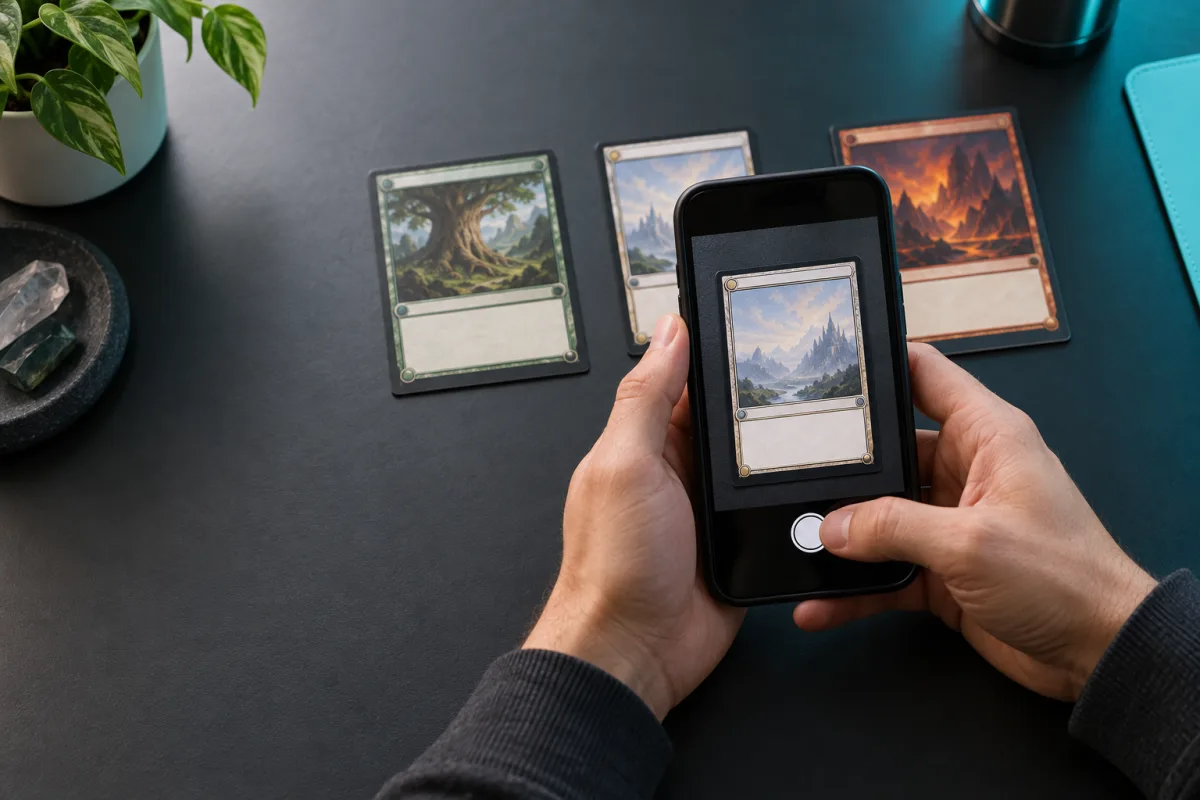
How to choose the best TCG card scanner app
Compare TCG scanners by print accuracy, language coverage, price sources, collection tools and correction controls before paying.
TCG card scanner on iPhone and Android: what to check
Before choosing a phone-based TCG scanner, test camera capture, card matching, correction, pricing and collection sync on your device.
How to batch scan trading cards without losing accuracy
Scan several cards in one photo or move through cards one by one, then verify printings before adding values to a collection.
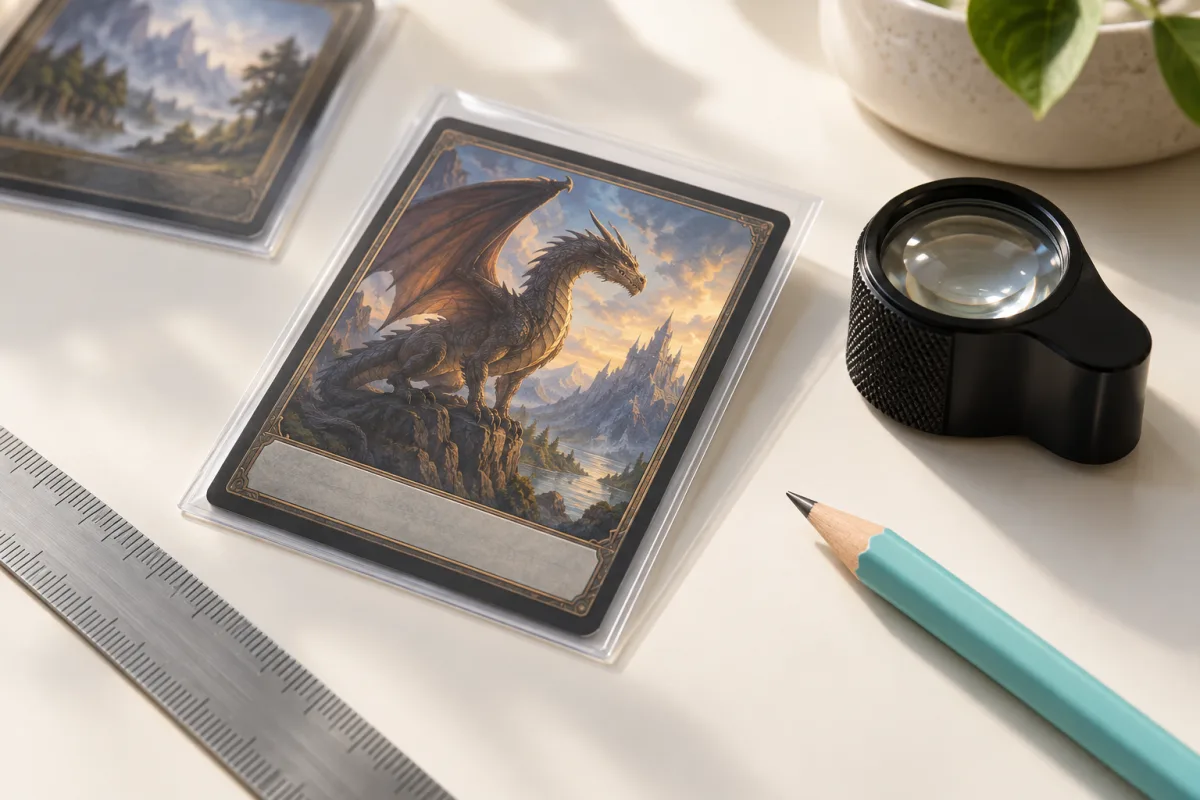
AI card grading apps: what they can and cannot tell you
AI pre-grading can highlight centering, corner and surface concerns from photos. Learn why it is an estimate, not a professional grade.
How accurate is AI card grading from photos?
Understand what changes an AI condition estimate: centering, focus, glare, card sleeves, hidden damage and grading standards.
How to check trading card centering
Measure left-right and top-bottom borders, calculate the split and understand why centering alone does not determine a card's grade.
Pokémon card condition: a practical inspection guide
Check a Pokémon card's corners, edges, surface and centering before assigning a raw condition or comparing prices.
Pokémon holo vs reverse holo: identify the right print
Learn how holo and reverse-holo finishes differ, why the set and number still matter and how to compare their values.
How to check Japanese Pokémon card prices
Identify a Japanese Pokémon card by set code and number, then compare sales in the same language, finish and condition.
How to identify a Japanese Pokémon card
Find a Japanese Pokémon card's set code, collector number, rarity and finish before searching for its exact database record.
How to scan and identify One Piece cards
Use the printed One Piece card code, set and artwork to confirm a scan before checking the value of a standard or alternate-art card.
One Piece alternate art: identify and value cards
Separate One Piece alternate art and parallel cards from base prints by illustration, set, language and sale evidence.
How to check the price of a Magic: The Gathering card
Identify a Magic card's set, collector number, language, foil treatment and condition before comparing prices.
How to identify an MTG set symbol and printing
Use a Magic card's expansion symbol, collector number, copyright line and frame to find the exact printing.
Yu-Gi-Oh! card code lookup and value guide
Read a Yu-Gi-Oh! set code, edition and rarity treatment, then search for the exact printing before pricing it.
How to check Digimon card prices
Identify a Digimon card by number, set, language and parallel art, then compare recent sales for the same printing.
How to value Dragon Ball Super cards
Check Dragon Ball Super set, card number, language and rarity treatment before comparing sale prices.
How to check Riftbound card prices
Identify the exact Riftbound card, finish, language and condition before using listings or completed sales to estimate value.
Trading card marketplace fees: calculate what you keep
Compare commission, payment costs, shipping and grading costs before choosing where to sell a trading card.
How to price a trading card collection for sale
Separate high-value singles from bulk, confirm exact prints and conditions, then estimate sale proceeds rather than adding optimistic list prices.
CardBoom covers Pokémon, One Piece, Yu-Gi-Oh!, Magic: The Gathering.
Open CardBoom