AI card grading apps: what they can and cannot tell you
A phone photo can help decide which cards deserve closer inspection. It cannot turn a raw card into a certified PSA, BGS or CGC grade, and it should never be used as a guarantee of resale value.
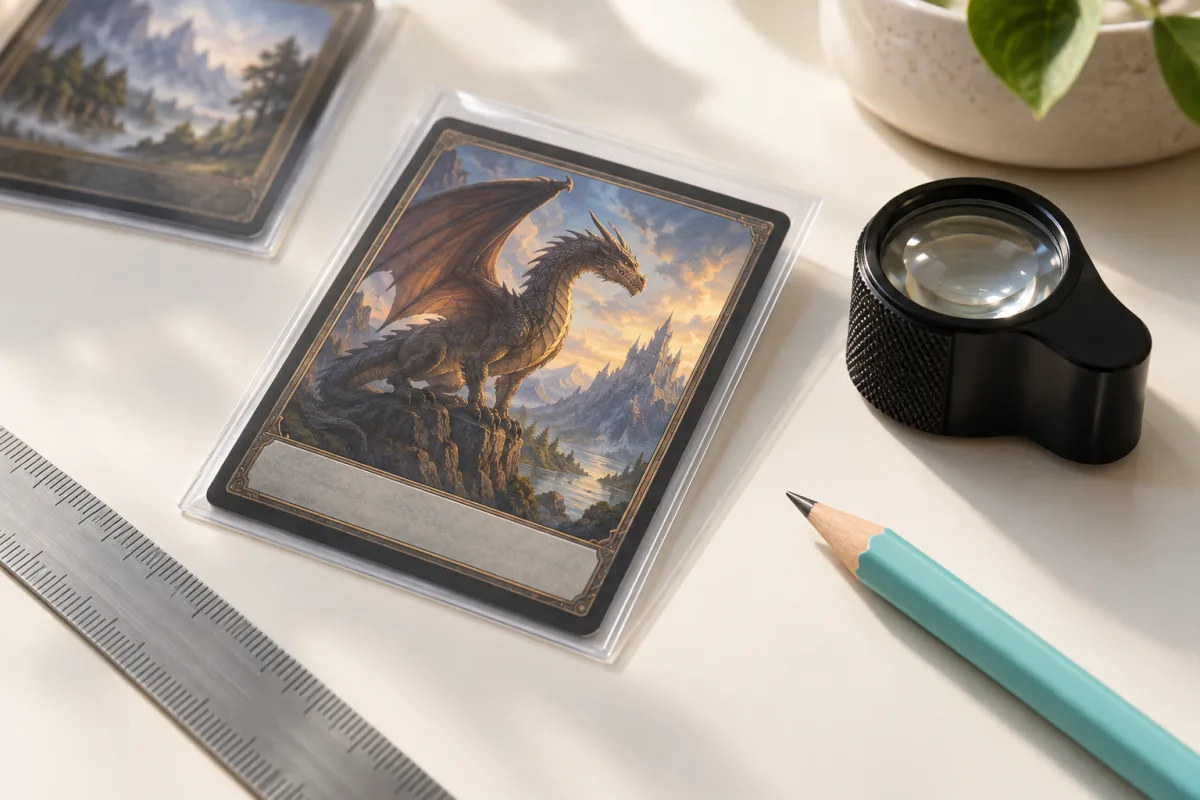
What the camera can measure
A straight, high-resolution front image can support a centering estimate and reveal obvious edge wear. Front and back images under angled light may show scratches, dents and whitening. The result depends on lighting, sleeves, focus and whether the whole border is visible.
What a photo can miss
Subtle surface indentations, trimming, print defects and authenticity questions may require in-person examination. Professional services also apply their own standards and may weigh eye appeal differently. A predicted 10 should be treated as a possibility, not a promise.
Use the estimate to make a decision
Compare realistic sale prices for the raw card and several possible grades. Subtract grading, insured shipping, selling fees and time. If only a perfect grade would make the submission profitable, the risk is high.
Photograph for condition, not just identification
Take separate, full-frame photographs of the front and back on a flat, neutral surface. Hold the phone directly above the card so the printed borders are not stretched by perspective. Add soft overhead light, then tilt the card under a second light angle to reveal surface scratches and dents. A single bright flash can erase detail on foil; a sleeve can add false edges. Retake any image in which a corner or border disappears.
Record what the tool actually reports. A useful output names visible issues and gives an uncertainty range. A bare number such as '9.5' without a surface explanation is difficult to act on. Ask whether the model saw the back and whether it distinguishes print defects from wear.
Run a break-even calculation with several outcomes
Suppose a raw card could sell for $60. Imagine the same print sells for $95 at one certified grade and $210 at the next, while grading, insured postage and selling costs total $45. The first graded outcome leaves $50 before your original card cost, below the raw sale. The second leaves $165. The expected outcome depends on the probability of each grade, which a phone photo cannot establish precisely.
Do not use a PSA 10 asking price as the only success case. Look for completed sales in the same language and print, including lower grades and cards that remained raw. Factor in turnaround time and the risk of damage or loss during shipping. If the economics work only at the highest grade, consider selling raw instead.
Keep certification separate from prediction
An AI pre-grade is private guidance based on images. It does not authenticate the card, seal it in a tamper-evident case or create a certificate recognized by a grading company. When selling, describe the card as raw unless it has been physically graded by a named service. If you buy a slab, verify its certification number on the grader's site and inspect the card, label and case in person or through clear seller photographs.
Use the tool again after improving a poor photograph, but do not treat a higher second estimate as proof that the card improved. The physical condition did not change; the measurement changed.
Grading break-even calculator
Compare selling raw with one possible certified-grade outcome. Run it again with a lower grade before you submit.
Assumes the card receives the selected grade and sells at that price. An AI estimate cannot guarantee either outcome.
Common questions
Is an AI grade official?
No. It is an image-based condition estimate. A professional grade requires submission to the grading company.
Can AI detect a fake slab?
A photo alone cannot authenticate a slab. Verify the cert number with the grader and inspect the physical label and case.
Sources and further reading
Related guides
How accurate is AI card grading from photos?
Understand what changes an AI condition estimate: centering, focus, glare, card sleeves, hidden damage and grading standards.
Is my card worth grading?
Grading pays off when the graded price minus fees beats the raw price. Here is the break-even maths, plus the flaws that stop a card hitting a 10.
How to check trading card centering
Measure left-right and top-bottom borders, calculate the split and understand why centering alone does not determine a card's grade.
Look up the exact card printing before using a value estimate. CardBoom also lets you save supported cards to a collection.
Explore the catalog Get the Android app